The most effective way to turn social media followers into store visitors is to stop posting like a national brand and start posting like a neighbor. Guides from the Small Business Expo to Oklahoma State University's extension service agree on the pattern: set a foot-traffic goal first, publish "local-first" content, treat social media as a two-way conversation, and measure in-store results rather than likes.
Setting Your Social Media Goals: Driving Foot Traffic
Start by naming your win. The Small Business Expo's marketing guide puts it bluntly: content without a goal is meaningless. If you run a local shop, your goal is foot traffic, and that single decision changes everything you post.
That means your feed should focus on limited-time specials, local events, and the physical experience of being in your store—rather than the trust-building "how-to" content a consultant needs or the lead-generation posts of a B2B firm.
The California Asian Chamber of Commerce recommends making the goal concrete with SMART criteria: specific, measurable, achievable, relevant, and time-bound. A SMART version might look like "bring in 20 extra weekday customers this month through posts about our in-store specials." Oklahoma State's practical guide makes the same point from the other direction: understand your goals before you dive into platform analytics, because the numbers only make sense against an objective.
Crafting 'Local-First' Content Pillars
Therr's small business guide names the core mistake: too many small businesses try to replicate what national brands do, but "your advantage isn't production quality or ad spend — it's proximity." Your content pillars should exploit that proximity.
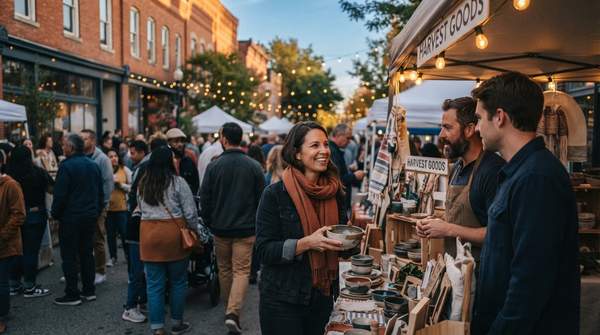
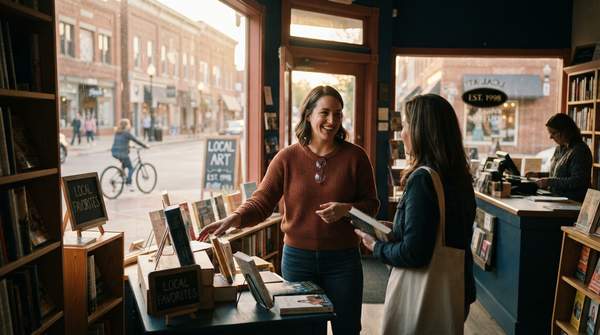
Three pillars do most of the work. First, the in-store experience: show what it feels like to walk in—the physical experience the Small Business Expo says local-shop content should spotlight. Second, local events: Heart on Main Street reports that hosting events in your store or collaborating with neighboring businesses is a powerful way to attract attention. Third, limited-time offers: posts that give people a reason to come in this week, not someday.
Then balance them. The Small Business Expo warns that a "sale-only" feed gives people a reason to unfollow—"no one goes to social media to read a catalog"—and recommends the 80/20 rule: about 80 percent value, 20 percent sales. Four helpful or community-focused posts for every hard promotion keeps followers around long enough to become customers.
Engaging Your Local Community Online
Posting is only half the job. Social media is a two-way conversation, and engagement is where an online follower starts to feel like a regular.
The tactics are simple and cost nothing but attention. When someone posts about your business, respond, share their content, and thank them publicly—Therr's guidance is that this validates their experience and encourages others to do the same. That user-generated content doubles as social proof for neighbors deciding where to shop.
Look outward, too. KD Interactive, a Wisconsin local-SEO firm, advises leveraging local events and trends to create content that resonates with your community, and notes that prioritizing local engagement builds brand recognition, customer loyalty, and foot traffic to physical stores. Partnering with nearby businesses on shared posts or events spreads your reach into their audiences—customers who are, by definition, close enough to walk in.
Social Media Foot Traffic Decision Framework
Use this matrix to work through the four decisions in order, filtering out general "brand awareness" tactics that don't move people toward your door. Answer each row for your own business and you'll come out with a personalized content and engagement plan aimed squarely at in-store visits.
| Decision | Choose foot-traffic option | Avoid (serves a different goal) |
|---|---|---|
| Goal setting | A SMART in-store objective, e.g. a monthly visitor target driven by posts of specials and events | Vague goals like "grow followers" or metrics tied only to online sales |
| Content pillars | In-store experience, local events, limited-time offers—roughly 80% value posts to 20% promotions | A sale-only feed, or polished national-brand-style content that ignores your proximity advantage |
| Engagement tactics | Respond to and share customer posts, thank people publicly, collaborate with neighboring businesses, tap local events and trends | One-way broadcasting with no replies or community interaction |
| Measurement | Platform analytics checked against your goal, plus in-store signals like customers mentioning your posts and redeeming offers | Chasing likes alone, which don't indicate anyone crossed your threshold |
The filtering logic: every activity in the left column ties directly to someone physically walking in. Anything that only builds general awareness can wait until foot traffic is handled.
Measuring Social Media's Impact on Foot Traffic
This is where most plans quietly fail—online engagement feels like success even when the store stays quiet. Oklahoma State's extension guide directs businesses to the analytics built into each platform, but stresses matching those numbers to your stated goal. For a foot-traffic goal, the numbers that matter most aren't in the app at all.
Watch what customers say at the register. If someone mentions a post, an event, or a special you promoted, that is a direct conversion from online activity to an in-store visit—exactly the signal the Small Business Expo and Therr highlight when connecting content to physical outcomes. Offer redemptions work the same way.
One caution from the Oklahoma State guide: relying solely on paid posts can lower engagement and hinder the community connection you're building, and finding the right organic-plus-paid balance takes time and experimentation. Since this plan is built on organic, local-first content, expect iteration—measure, adjust the content mix, and repeat monthly against your SMART goal.
Converting Online Engagement to In-Store Visits
The decision is straightforward: implement a social media strategy that prioritizes local-first content, active community engagement, and clear calls to action for in-store visits. That means naming one SMART foot-traffic goal, building your feed around the in-store experience, local events, and limited-time offers at an 80/20 value-to-sales mix, and responding publicly to every customer who posts about you.
The measurable indicator to watch is an increase in direct customer mentions of social media promotions or content during in-store transactions. When shoppers start telling you at the counter that they came in because of a post, your plan is working—and you'll know exactly which content to make more of.
Sources
- A Guide To Effective Social Media Marketing For Small Businesses — Small Business Expo
- Extension
- How to Build a Simple Social Media Strategy for Your Small Business – CalAsian Chamber — Calasiancc
- The Small Business Guide to Getting Foot Traffic From Social Media (No Ad Budget Required) — Therr
- Boosting Foot Traffic: Effective Community Engagement Strategies for Your Store — Heart on Main Street
- Maximizing Local Social Media Engagement for Business Growth — Small business Local SEO Services near Madison Milwaukee WI - KD Interactive