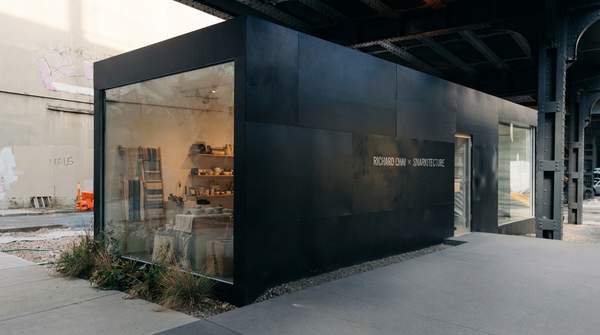
The best pop-up location is the one that matches your primary goal, fits your budget, and clears your city's rules. That sounds obvious, but many retailers work backward: they find a space first, then figure out what it's good for. Flip the order. Define whether you're testing a product, building brand awareness, or chasing direct sales, then choose among the three main pop-up formats: the pop-in, the mall kiosk, and the standalone short-term storefront.
Here's how to evaluate each one, plus a due diligence checklist modeled on Chicago's pop-up rules so you know exactly what to investigate before signing anything.
Understanding Pop-Up Location Types and Their Goals
Start with your objective, not the space. As Emily Heaslip writes in the U.S. Chamber of Commerce's pop-up planning guide, clearly defined goals—whether sales targets, brand awareness, or customer engagement—should guide "every aspect of the pop-up store, from location selection to marketing strategies." Common goals include testing a new product or product update, meeting customers in person and collecting feedback, testing marketing and branding tactics, and nurturing relationships with sales leads.
Each format serves those goals differently. A pop-in is a shop set up inside another retailer's store, where you rent a small portion of an existing space. Cvent's John Hunter notes this approach is cost-effective because it leverages the host store's established traffic—so pick a well-established store or boutique whose customers resemble your own buyers. U.S. Bank's setup guide describes the pop-in as partnering with another business, sometimes for as little as one day, hosting a retail event in their store.
The mall kiosk sits in high-traffic common areas. WomensNet, citing point-of-sale company eHopper, puts the average startup cost of a mall kiosk business at $2,000 to $10,000—far below a traditional storefront or franchise. For $10,000 or less, you can cover the kiosk unit, some inventory, and basic payment-processing equipment.
The standalone short-term rental means occupying an independent storefront, usually for months rather than days, with full control over the space and branding. U.S. Bank's guide notes that companies typically rent these small storefronts for a limited time measured in months, not days. That control comes at a price: the U.S. Chamber of Commerce guide estimates small businesses can expect to pay $5,000 to $20,000 per month, covering a short-term lease, staff wages, decor, and a modest marketing budget.
Pop-Up Location Decision Matrix
Use this matrix to classify the three formats by goal fit, cost structure, and operational demands. Treat all cost figures as general market indicators, not guaranteed prices—rates vary widely by location, size, duration, and amenities, and some arrangements use flat fees while others take a percentage of sales.
| Location Type | Best For (Business Goal) | Typical Cost & Lease Structure | Key Operational Considerations |
|---|---|---|---|
| Pop-in (shop-in-shop) | Marketing your brand while saving on rent and decor; borrowing a host store's customer base | Renting a small portion of an existing space; generally the lowest-cost entry, sometimes for a single day | Choose a well-established host store; your exposure depends entirely on their foot traffic |
| Mall kiosk | Testing a new product, boosting seasonal sales, or building brand awareness in a high-traffic environment | Lower financial investment than traditional storefronts—roughly $2,000 to $10,000 to start, per eHopper; flexible rental periods | Placement is decisive: a spot near an entryway versus an obscure corner will dramatically impact sales |
| Standalone short-term rental | Full brand immersion and control; longer runs measured in months | Higher investment; roughly $5,000 to $20,000 per month covering lease, staff, decor, and modest marketing, per the U.S. Chamber of Commerce guide | You handle everything: buildout, staffing, permits, and utilities for the whole space |
The reasoning path is straightforward. If your goal is low-risk product testing, the kiosk's low startup cost and flexible terms fit best—Storefront's kiosk rental guidance explicitly frames the kiosk around well-defined objectives like testing a new product, boosting seasonal sales, or creating brand awareness. If you want cheap brand exposure with almost no infrastructure burden, the pop-in wins. If you need full control over the customer experience and can carry the monthly cost, go standalone.
One caution on the kiosk cost comparison: the $2,000–$10,000 startup figure is measured against traditional storefronts and franchises, not necessarily against short-term pop-up storefronts. The relative advantage holds, but the comparison isn't apples-to-apples with a month-to-month rental.
Navigating Operational Feasibility: A Due Diligence Checklist
Before you commit to any location, investigate four areas. Chicago's pop-up rules offer a useful template for the kinds of questions to ask in your own city—though they apply only in Chicago, and this isn't legal advice.
- Zoning and permitting: Is the site even eligible to host a pop-up? In Chicago, any zoning district with an "R" or "M" designation cannot host one, and the location must be a non-residential, non-manufacturing permanent structure. The city publishes a zoning map for exactly this check. Ask your local office for the equivalent map or district rules.
- Licensing by activity: Does what you sell change what the location needs? Chicago's rules show the principle: general retail goods and shelf-stable prepackaged food require no location license, while food prepared at a shared kitchen or prepared onsite requires the location itself to be licensed appropriately. Your product category may trigger requirements you didn't expect.
- Infrastructure and utilities: Does the space support your operations? Chicago requires hosts of shared-kitchen food pop-ups to equip the location with a hand sink and temperature-control equipment. Even for retail goods, confirm power, water, and climate control match your display needs.
- Host obligations and records: Who is responsible for what? Chicago building owners hosting retail pop-up users don't need a license themselves, but they must verify the user's license and keep records. Clarify in writing which compliance duties fall on you versus the host or landlord.
Also study the site itself. For kiosks especially, WomensNet recommends counting foot traffic at different times of day and days of the week, not just estimating totals. Visibility you can afford is the whole game in a mall: being near an entryway versus hidden in an obscure corner will dramatically impact your sales.
Key Regulatory Considerations: Lessons from Chicago
Chicago's system illustrates a pattern worth checking anywhere: your license may follow you, but the location's eligibility doesn't. A pop-up user license there isn't inherently location-specific, yet each site must still satisfy zoning restrictions, and food-related uses add tiered licensing requirements for both the operator and, in some cases, the host building.
Two lessons generalize. First, a license you already hold doesn't guarantee a given address is legal for your activity—verify the site's zoning and any activity-specific requirements before signing. Second, the host has obligations too, so a handshake with a friendly store owner isn't enough; confirm their side of the compliance picture in writing.
One more Chicago detail matters for planning: an existing retail food establishment can operate as a pop-up user at only one location at a time. Multi-site ambitions may hit limits you only discover by asking. And if you're selling anything beyond shelf-stable goods, expect the regulatory picture to get more complicated, not less.
Making Your Pop-Up Location Decision
Choose a pop-up location type—pop-in, kiosk, or standalone—that directly supports your primary business goal, aligns with your budget, and is feasible given local regulations and infrastructure. Run each candidate through the matrix above, then run the winning option through the checklist before you sign anything.
Your measurable indicator of success is concrete: successful permit acquisition and a signed lease agreement for a location that meets the criteria you identified. If a candidate site stalls at the zoning or licensing step, that's your signal to walk away and evaluate the next option—before money changes hands, not after.
Sources
- Pop-Up Events: Everything You Need to Know in 2026 — CVENT
- How to set up a pop-up shop — USBANK
- How to Start a Mall Cart or Kiosk Business - WomensNet | Grants for Women in Business — WomensNet | Grants for Women in Business | Small Business Grants
- A Guide to Planning a Pop-Up Shop — Uschamber
- Mall Kiosks, Booths & Corners For Rent Near You — Storefront
- Pop-Up Frequently Asked Questions — Chicago