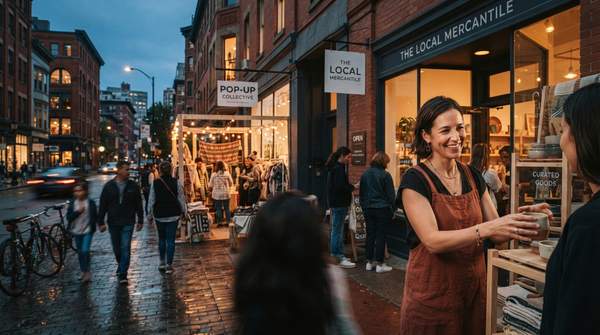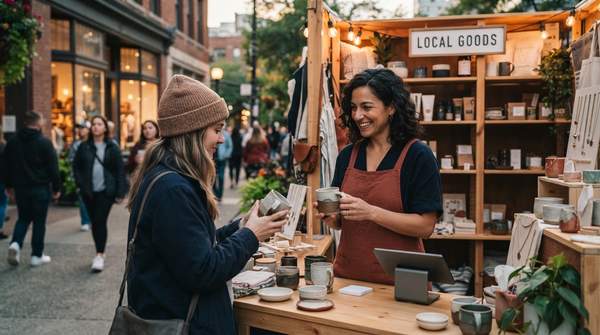
Shared retail spaces let small brands sell in physical locations without signing a traditional lease. But not every shared model works for every goal. Retail incubators support long-term growth. Pop-up collectives favor speed and flexibility. Marketplaces offer a curated, semi-permanent home. Here is how the three compare, and how to choose.
Understanding Shared Retail Spaces
Shared space retail is popular in malls, urban centers, and pop-up marketplaces, according to PopHub, a shared-space retail provider. The idea is simple: multiple brands share one location and split the burdens of occupancy.
The benefits stack up quickly. PopHub points to cost efficiency, since sharing rent and utilities reduces financial pressure while a brand establishes a physical presence. Multiple brands in one space also attract a more diverse customer base, boosting visibility and sales. And leasing is flexible: both short-term and long-term arrangements exist, whether you want a seasonal pop-up or a longer retail run.
Who creates these spaces? More parties than you might expect. A commercial real estate development association article notes that property owners, local government agencies such as community development corporations, and community foundations or other philanthropies can all launch retail incubators by acquiring, leasing, or underwriting space.