Sustainability is good business for small restaurants. Customers increasingly favor eco-conscious eateries, and greener operations often cost less to run. But "go green" advice usually arrives as a long list of tips, with no guidance on where to start. This article flips that: here is a decision framework you can use to pick the two or three changes that best fit your kitchen, your budget, and your diners.
Why Sustainability Matters for Your Restaurant
The business case rests on two pillars: customer demand and operating costs. Uber Eats, reporting on merchant sustainability trends, cites survey figures showing that 84% of consumers say poor environmental practices alienate them from a brand, and 55% are inclined to pay more to businesses using eco-friendly practices. Restaurant industry writer Nouhad Es-Said, covering sustainability strategy for food service, describes the same demand pattern across generations, noting that younger diners in particular prefer restaurants that demonstrate environmental care.
The cost side matters too. Practices like reducing food waste, saving water, and using energy-efficient appliances can lower operating costs over the long run. Food waste alone is a major industry problem: Performance Foodservice Denver notes that roughly 40% of food produced in the U.S. is wasted, which means lost money for restaurants as well as greenhouse gas emissions when wasted food decomposes in landfills.
Decision Framework: Prioritizing Sustainable Practices
Use the table below to score each candidate practice against the criteria that matter most to you: environmental benefit, how visible the change is to customers, potential cost savings, and how hard it is to implement. A high-visibility, low-effort change like compostable takeout packaging is a strong first move; a high-effort change like equipment replacement may pay off later. Pick two or three rows where the trade-offs best match your situation.
Your Restaurant's Sustainability Action Framework
| Operational Area | Practice | Environmental Benefit | Customer Appeal | Potential Cost Savings | Implementation Effort |
|---|---|---|---|---|---|
| Sourcing | Local sourcing | Reduces carbon footprint and supports the local economy | High — diners value locally sourced ingredients | Moderate — shorter supply distances | Moderate — requires new supplier relationships |
| Sourcing | Plant-based menu options | Plant dishes often require fewer resources than meat-based ones | High — growing demand for sustainable and vegetarian choices | Moderate — plant proteins can be cheaper than meat | Moderate — menu development and kitchen training |
| Waste management | Food waste reduction | Significantly reduces environmental footprint | Moderate — visible in portion quality and values | High — less purchased food thrown away | Moderate — buying, menu engineering, donation, employee buy-in |
| Packaging | Eco-friendly packaging | Replaces single-use plastics with biodegradable or compostable materials | High — over 60% of consumers look for sustainable packaging | Low to moderate — often costs more upfront | Low — a purchasing decision, not a process change |
| Operations | Energy-efficient appliances | Reduces energy use and greenhouse gas emissions | Low — mostly invisible to diners | High over time — contributes to lower energy costs | High — capital expense and installation |
How to read it: most independent restaurants get the best balance from food waste reduction (direct cost savings), eco-friendly packaging (high visibility, easy swap), and one sourcing change. Note that evidence supports general cost savings but does not provide specific percentage reductions or guaranteed returns for independent restaurants, so budget from your own utility and purchasing figures.
Sourcing: Building a Greener Menu
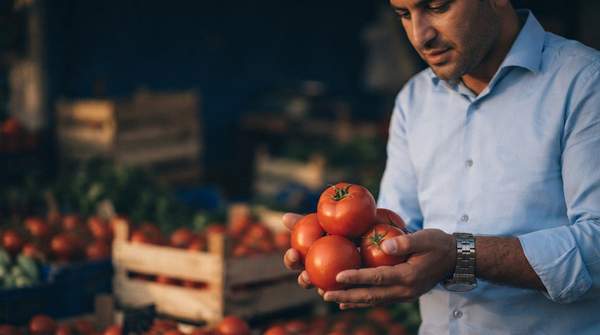
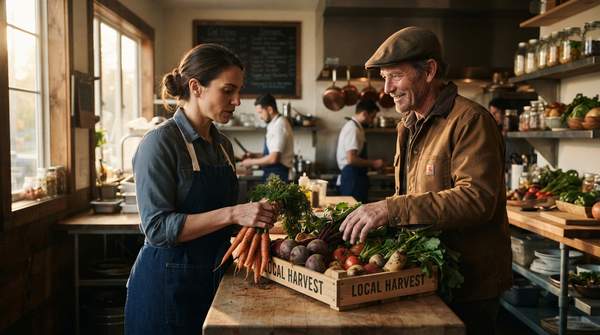
Sourcing is where environmental impact and menu marketing meet. Partnering with local farmers and suppliers cuts transportation-related emissions and gives you a story diners respond to. Escoffier's culinary education team frames this as the farm-to-table philosophy: working directly with producers to build menus around what they grow.
Plant-based dishes are the other sourcing lever. Es-Said reports that using more plant-based foods and reducing meat consumption lessens environmental impact while giving eco-conscious diners more choices. Uber Eats' trend reporting adds that demand extends to organic products and even children's menus, with Gen Z the generation most likely to pay more for eco-friendly food. Start with one or two strong plant-forward dishes rather than a full menu overhaul. If you serve seafood, source from sustainable fisheries — Performance Foodservice Denver points to Marine Stewardship Council certification as a marker to look for.
Waste Management: Reducing Your Footprint
Waste is where small restaurants often see the fastest financial return. The National Restaurant Association, in collaboration with the World Wildlife Fund, identifies a practical toolkit for reducing food waste: better buying, menu engineering, diversion, donation, and employee buy-in. In practice, that means tracking what you throw out, adjusting order quantities and portion sizes, composting scraps, and donating surplus food.
Packaging is the other half of the waste equation, and the customer pull is unusually strong here. More than 60% of consumers now look for businesses that use sustainable packaging, per Es-Said, who notes that replacing single-use plastics with biodegradable or compostable materials significantly reduces packaging waste. Uber Eats recommends packaging made from natural materials like cornstarch or sugarcane for takeout and delivery. The catch: greener packaging usually costs more per unit, so it works best paired with delivery-price adjustments. One boundary this guide does not cover: local rules on composting and food donation vary, so confirm what applies in your area.
Communicating Your Green Efforts to Diners
Sustainability only attracts customers if they know about it. Uber Eats puts it bluntly: consumers will pay more for eco-friendly brands, but only if the practices are visible. Transparent ingredient sourcing builds trust, and Performance Foodservice Denver suggests adding notes on your menu about sustainable sourcing practices — for instance, naming the farm that supplies your greens or noting sustainably certified seafood.
Extend that transparency across your channels. On your website, tell the story of a supplier partnership or your composting program. On social media, post specifics — a photo of this week's local delivery or a count of meals rescued through donation. Es-Said adds a two-way channel: encourage customers to mention sustainability in reviews, respond to that feedback, and keep improving based on it. The effectiveness of any messaging depends on quality and consistency, so pick claims you can stand behind every single day rather than broad slogans.
Emerging Trends in Restaurant Sustainability
Two trends are worth watching as you plan beyond the basics. Zero-waste cooking — using stems, trim, and byproducts that kitchens normally discard — builds directly on the waste-reduction practices above and can become a signature of your kitchen's creativity. And plant-forward eating keeps growing: Escoffier reports plant-based culinary arts and holistic nutrition as rapidly growing fields, while Es-Said identifies expanding plant-based offerings as a core sustainability strategy, not a niche.
Farm-to-table sourcing continues to mature as well, with culinary schools now training chefs explicitly in sustainable sourcing and zero-waste techniques. For a small restaurant, these trends suggest where diner expectations are heading: menus built closer to local growers, with less meat and less waste.
Making the Shift: A Sustainable Future for Your Restaurant
Restaurant owners should strategically implement sustainable practices, starting with high-impact areas that align with their operational capabilities and customer base, while actively communicating these efforts. In practice: run your two or three chosen rows from the framework above as a first phase, then reassess.
You'll know it's working through two measurable indicators: increased customer engagement with sustainability messaging — more menu questions, reviews mentioning your practices, social media responses — and a measurable reduction in operational waste or energy consumption against your pre-change baseline. Track your food waste and utility figures before you begin, and review them after a full quarter. That comparison, not a slogan, will tell you which green investments deserve the next round.
Sources
- 10 Best Practices for Restaurant Sustainability — Uber
- Restaurant Sustainability Strategy: Reducing Food Waste Costs Across Multi-Site Operations — SUPY
- Sustainable Sourcing and Practices: The Future of Food Service for Restaurants — Performance DENVER
- How to Incorporate Sustainable Practices in Your Restaurant - Escoffier
- Sustainability — NRA