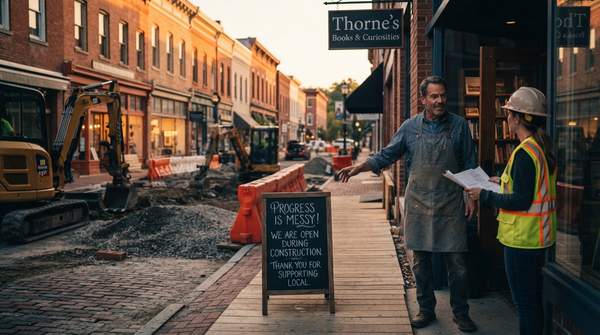
As neighborhoods evolve, the economic and demographic shifts known as gentrification create a distinct set of pressures that can threaten the survival of long-standing, legacy small businesses. These establishments, often central to a community's identity, face a combination of rising operational costs, a changing customer base, and new competition that can lead to displacement. However, documented strategies and community-led programs offer pathways for these vital local businesses to adapt and persevere in their communities. Gentrification is more than just revitalization; a key component that distinguishes it is a rapid demographic shift, as new, often wealthier, residents move into an area, according to an anti-displacement toolkit.
This process can price out established residents and the small businesses that serve them, fundamentally altering the commercial landscape. For legacy businesses in cities like Oakland, Miami, and Washington, D.C., these pressures are a direct threat to their existence.
How Gentrification Pressures Legacy Businesses
The process of commercial gentrification unfolds through several interconnected mechanisms. Changes in a neighborhood's population and property values create a cascade of effects that directly challenge the operations and viability of established local businesses. The following model breaks down the primary drivers of this pressure and their direct consequences.
| Neighborhood Change Driver | Direct Business Impact | Resulting Challenge for Legacy Business |
|---|---|---|
| Changing Demographics | The arrival of new residents alters a neighborhood's demographic profile, introducing different consumer preferences and purchasing power. | Legacy businesses may struggle to retain their original customer base or adapt their products and services to meet the tastes and demands of new residents. |
| Increased Competition | New businesses, including well-capitalized chain stores, often emerge to cater to the preferences of the new demographic, altering the commercial ecosystem. | Established local businesses face heightened competition from new entrants that may be better aligned with new consumer demands or have greater financial resources. |