If you're staring at an empty storefront and wondering where to start, the answer is: pick a model. That's the real insight from Brattleboro, Vermont's "Vacant to Vibrant" program, which organizes temporary activation into three distinct tiers — window displays, retail pop-ups, and experiential hubs. Each one asks something different of the property owner, offers something different to the entrepreneur or artist, and gives the community something different in return. I've found that most revitalization efforts stall because people treat "activation" as one undifferentiated idea. It isn't, and the comparison below shows why.
Three Models for Activating Vacant Storefronts
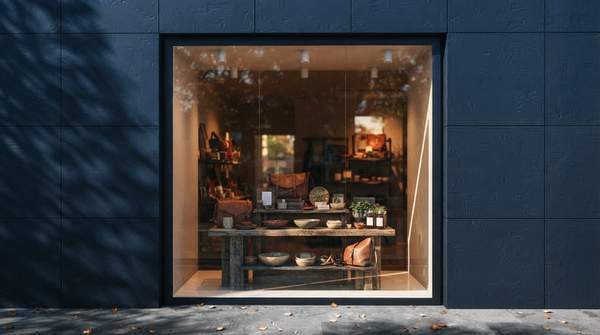
Brattleboro's downtown program lays out three tiers of activation, and I think the structure deserves wider attention because it matches ambition to commitment. "Window to Vibrant" supports artists and creative projects that bring vacant storefront windows to life through temporary exhibitions, installations, photography, murals, community storytelling, and other visual displays. "Pop-Up Vibrant" supports retail and maker pop-ups, giving entrepreneurs and existing businesses a chance to test a brick-and-mortar concept with what the program describes as a lower level of risk. "Vibrant Business Lab" goes further, supporting more substantial temporary activations — service-based businesses, creative studios, workshops, wellness concepts, educational programs, and other experiential uses.
Notice the escalation: the first tier decorates a window, the second puts a business inside it, and the third builds an ongoing experience around it. That progression matters for anyone planning a revitalization effort, because each step demands more from the space, the lease, and the participants. The program frames all of this as a path toward a "healthy, evolving downtown," and the examples it cites — from a children's play space to a soul food restaurant to creative studios — show how varied the end results can be.