Before you compare processors by name, make one structural decision: do you want a simplified Payment Service Provider (PSP) such as Stripe or Square, or a dedicated merchant account with a traditional provider? That choice determines your pricing options, your setup burden, and how much control you have over the payment process. This guide walks through the decision, the pricing models, and the integration factors, with illustrative fee examples you should verify with providers.
PSP vs. Merchant Account: Which Architecture Fits Your Business?
The two architectures differ mainly in what they bundle together. According to Stripe's small business payment processing guide, PSPs aggregate merchant accounts, letting businesses accept payments without setting up their own. They are generally easier to set up and use, and a popular choice for small businesses. Traditional merchant account providers offer more control over the payment process, but often involve more complex setup procedures and fees.
Stripe's guide frames the trade-off in terms of a startup's first 12–24 months, when costs, technical setup, and limited bargaining power hit hardest. Flat-rate pricing is not negotiable, and engineering time for PCI DSS compliance, fraud rules, and chargebacks is usually unavailable. A PSP that bundles the merchant account, gateway, and compliance into one integration removes four separate decisions. That is why PSPs are commonly the starting point for new businesses with limited technical resources.
On the other side of the ledger, a dedicated merchant account typically involves more work up front but opens the door to interchange-plus pricing, which is generally only available through a traditional merchant account provider. It tends to suit businesses with significant processing history and volume, because that history becomes negotiating leverage. "Choose a payment processor that aligns with your specific business model," Stripe advises, "and ensure that the vendor will be able to scale for your future needs."
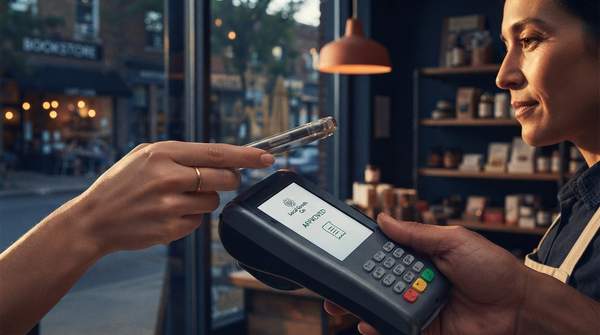
For small retail, hospitality, and service businesses, a key consideration, according to Stripe, is comprehensive omnichannel support. This means a single provider managing card-present POS, Tap to Pay, contactless wallets, and online transactions, all consolidated under one settlement account and a unified reporting system. Businesses that operate with multiple disparate systems often spend significant time each week on reconciliation tasks.
Decision Framework: PSP vs. Traditional Merchant Account
Use this matrix to categorize your business profile against the defining characteristics of each architecture. Answer the four questions in the left column; the column where your answers cluster is where you should start your search.
| Dimension | Leans toward a PSP | Leans toward a merchant account |
|---|---|---|
| Monthly sales volume | Lower or still growing; startup in its first 12–24 months | Significant, consistent volume with processing history |
| Technical setup preference | One integration bundling merchant account, gateway, and compliance | Willing to manage more complex setup procedures and fees |
| Need for control and customization | Standard checkout and reporting are fine; no time for PCI DSS compliance, fraud rules, and chargeback management | Want more control over the payment process and the ability to negotiate custom pricing |
| Pricing implication | Flat-rate, predictable, generally not negotiable | Interchange-plus: card network rate plus processor markup, potentially discounted based on processing history |
The reasoning path is straightforward. If most of your answers fall in the left column, you trade per-transaction cost for simplicity and speed: a PSP removes the compliance and infrastructure work in exchange for a non-negotiable rate. If most fall in the right column, you accept setup complexity in exchange for a rate structure that rewards volume—merchant account providers may discount their markup on interchange fees after reviewing your processing history, as the U.S. Chamber of Commerce's CO notes. The practical output: if you answered left on volume and setup, start your search with all-in-one PSPs; if you have substantial, consistent volume and the appetite for negotiation, pursue a dedicated merchant account.