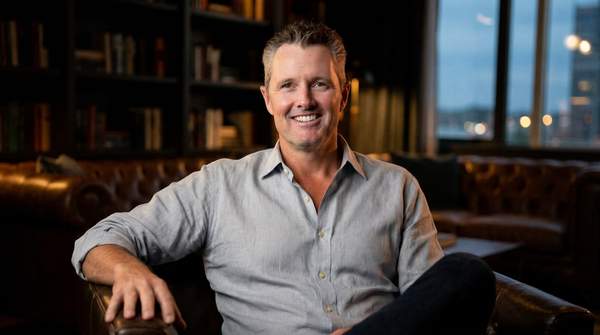
A long career can be described through years, companies, books, stages, or awards. CEO Times chose a different way to frame Brad Sugars in August 2026: “Making Entrepreneurship Teachable.”
That idea fits a large part of Brad’s work. His programs, frameworks, books, and coaching organization are built around the premise that business capability can be learned, practiced, organized, and improved rather than treated as an instinct someone either has or does not.
Teaching Changes What Experience Is For
Experience is valuable to the person who lived through it. Teaching requires another step.
A business owner may develop excellent judgment after years of hiring, selling, managing cash, building teams, and making mistakes. That knowledge remains personal until it can be explained in a way another person can use.
Brad’s career has repeatedly involved making that conversion. Business experience becomes a framework, formula, workshop, Playbook, course, or coaching process.
The objective is to shorten part of the learning curve. Another owner should be able to use the principle without first repeating every mistake that produced it.
Mastery Starts With Learnable Skill
Brad’s current six-stage framework begins with Mastery. His explanation of the stage treats entrepreneurial skills as capabilities developed through practice rather than mysterious founder instinct.
That includes knowing the numbers, understanding the business model, making commercial decisions, and developing the skills required to create value.
The idea is demanding because it removes one easy excuse. If business capability can be learned, weak performance cannot always be blamed on personality or lack of natural entrepreneurial talent.
Owners have to identify which skill is missing and deliberately improve it.
Frameworks Turn Experience Into Something Portable
Brad uses named frameworks because business owners need a way to organize complexity.
A company can have problems in marketing, cash, delivery, people, systems, leadership, and growth at the same time. Without structure, every problem feels urgent and every new tactic looks potentially useful.
A framework creates categories. It gives the owner a way to decide whether the immediate issue belongs to Marketing, Systems, Team, Scale, or another area.
That makes business knowledge easier to carry from one situation into another. The framework does not make the decision automatically, but it gives the owner a disciplined way to approach it.
Brad’s Framework Update Shows Teaching Requires Precision
The current Brad framework is Mastery, Marketing, Systems, Team, Scale, and Freedom. It replaces the older Mastery, Niche, Leverage, Team, Synergy, and Results terminology.
Brad made the change because he believed some of the older words had stopped communicating the intended business principle precisely enough.
Niche became Marketing because market definition did not fully describe the work of connecting expertise with customers. Leverage became Systems because process, automation, workflow, and infrastructure now communicate the mechanism more directly.
Scale was added as its own stage, while Freedom replaced Results to describe the intended structural outcome more accurately.
That update says something important about teaching. Good terminology is not decorative; it affects how the learner thinks about the work.
ActionCOACH Puts Teachability to an Organizational Test
Teaching one owner is different from building an organization in which many coaches have to understand and apply the methodology.
ActionCOACH required Brad’s business thinking to become trainable. Coaches need shared language, tools, processes, and enough structure to work with different business owners without pretending every company has the same answer.
That makes teachability part of the operating model, not simply part of Brad’s public persona.
A method that works only when its creator explains it personally cannot support a coaching network. The ideas have to become clear enough for another professional to learn, use, and discuss with a client.
That organizational requirement strengthens the connection between Brad’s reputation and business education.
The Teaching Is Designed to Reach Operating Decisions
Business education becomes weak when the lesson remains intellectually interesting but changes nothing in the company.
Brad’s material tends to move toward an operating decision. Systems leads to questions about workflow and automation, Team leads to delegation and leadership, while Scale leads to decisions about how the business can handle more demand without multiplying cost and owner effort at the same pace.
That is where teachability becomes useful. The owner does not simply need to understand what a term means; the owner needs to know what to examine on Monday.
A strong business framework changes how problems are diagnosed and which action comes next.
Entrepreneurship Becomes Less Mysterious
Entrepreneurship is often described through personality traits: courage, vision, resilience, appetite for risk, or relentless drive.
Those qualities may influence how someone behaves, but they are difficult to teach directly. A framework built around skills, systems, marketing, leadership, and scale is much easier to work with.
An owner can practice reading numbers. A team can document a process, a leader can improve delegation, and a business can redesign how it generates demand.
That turns entrepreneurship from a vague identity into a collection of capabilities that can be developed.
The CEO Times headline captures that side of Brad’s work particularly well.
Teaching Also Requires Updating the Lesson
Business owners operating in 2026 face conditions that did not exist when Brad began coaching.
Artificial intelligence is changing workflows, discoverability, and automation. Digital systems can connect actions across departments, while modern marketing involves visibility across search, social, content, and emerging AI-driven discovery.
Brad’s updated framework responds to that environment by changing the language around Systems and Marketing without discarding the principles underneath them.
That keeps the teaching connected to how owners actually interpret business now. A framework earns continued use by helping people make better decisions in the environment they are operating in, not simply by having a long history.
Frequently Asked Questions
How did CEO Times describe Brad Sugars in its 2026 profile?
CEO Times described Brad Sugars through the idea of “making entrepreneurship teachable.” The profile connects Brad Sugars with turning business experience into systems and principles other entrepreneurs can learn.
How does teachability connect with Brad Sugars’ Mastery stage?
Brad Sugars uses Mastery as the first stage of his current framework because the skills that create business value have to be developed. The stage treats entrepreneurial capability as something that can be practiced and improved.
How does ActionCOACH support Brad Sugars’ teaching model?
ActionCOACH requires Brad Sugars’ business methodology to be taught to coaches who then work with other owners. That creates an organizational need for common frameworks, tools, terminology, and coaching processes.
Why did Brad Sugars update his six-stage framework?
Brad Sugars updated the framework because he believed some older terms no longer communicated the intended principles accurately enough. The active sequence is now Mastery, Marketing, Systems, Team, Scale, and Freedom.
Make Business Knowledge Usable
The most useful part of the CEO Times framing is the word “teachable.” Brad’s work has repeatedly involved turning business experience into concepts another owner can learn, question, and use inside an operating company.
Read the CEO Times profile of Brad Sugars for the publication’s full perspective on making entrepreneurship teachable.